
Ahora rentando apartamentos de 2 habitaciones • Excelente ubicación • Vida asequible
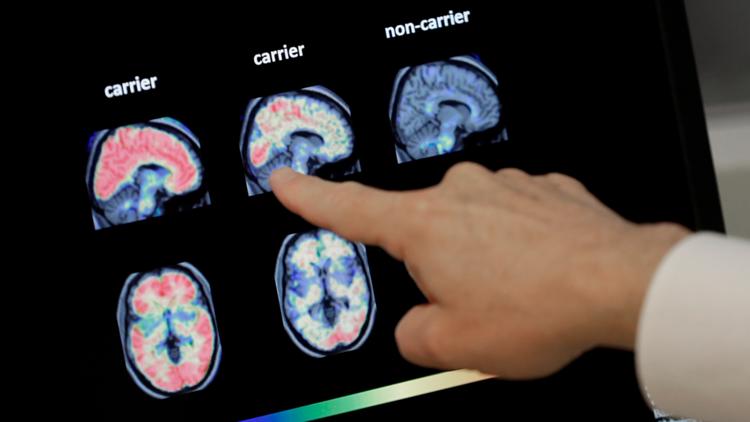
The lead researchers of the study say it represents a fundamental shift in understanding the disease.
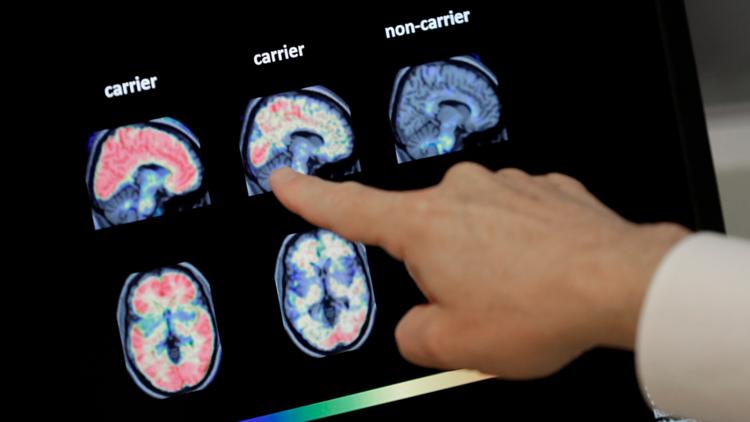
WASHINGTON — For over a century, Alzheimer’s disease has been considered irreversible, but a groundbreaking study from University Hospitals, Case Western Reserve University and the Cleveland VA is challenging that assumption.
Researchers have successfully reversed advanced Alzheimer’s in mice, achieving full cognitive recovery by restoring the brain’s energy balance.
Dr. Andrew Pieper, director of the Brain Health Medicines Center at University Hospitals and senior author of the study, emphasizes this represents a fundamental shift in understanding the disease.
“The key takeaway is a message of hope — the effects of Alzheimer’s disease may not be inevitably permanent,” Pieper said. “The damaged brain can, under some conditions, repair itself and regain function.”
The research, published in Cell Reports Medicine, focuses on NAD+, a cellular energy molecule that declines naturally with age. The team discovered that NAD+ levels drop even more dramatically in Alzheimer’s patients’ brains. By using a compound called P7C3-A20 developed in Pieper’s lab, researchers were able to stabilize NAD+ levels in two different mouse models of Alzheimer’s disease.
The results were striking. Mice with advanced Alzheimer’s not only stopped disease progression but also fully recovered cognitive function.
What makes this approach unique is that it’s independent of the amyloid-targeting therapies currently being used to treat Alzheimer’s.
“I want to stress that it’s independent of the amyloid approach which is being championed right now by a lot of people in the Alzheimer’s community,” Pieper said. “It could work on its own, potentially. We also think it could be complementary to any type of therapy that is being given to people.”
The compound works differently than over-the-counter NAD+ supplements.
“Our chemical compound stabilizes NAD homeostasis in the cell. It doesn’t ever elevate it to higher than normal physiologic levels, and that is desirable because you can be assured of safety in that way,” Pieper said.
He noted that over-the-counter NAD supplements can drive NAD+ production too high, which some in the medical community believe might be dangerous in certain circumstances.
“I think about NAD homeostasis as the gas tank of your car. If your gas tank is full, you’re always equipped to go faster suddenly if you need to, or pull a heavier load or go up a hill. If you’re always running on empty, then all of a sudden if you come across a big hill or if you suddenly have an increased workload, there’s a chance that you’re going to run out of gas,” he said. “If we can keep the energy levels stable where they’re supposed to be, then the brain is always equipped to fight off these insults and fight off the disease.”
The research team formed a company called Glengary Brain Health to move the treatment toward human trials.
While the compound works well in mice and has shown no safety problems in studies lasting up to a year in monkeys, it requires chemical modifications before it can be tested in humans. Pieper hopes to have a version ready for phase one safety trials within approximately 18 months.
The potential applications extend beyond Alzheimer’s. Pieper believes the approach could work in various forms of neurodegeneration and dementia, including traumatic brain injury.
“We view Alzheimer’s as the biggest problem. It’s an emergency, if you will, for our species,” he said. “We think that we’re potentially helping it by a mechanism that’s held in common with a lot of different aspects of brain health, and that is this ability to maintain normal NAD homeostasis and mitochondrial function.”
Pieper cautions that success in mice doesn’t guarantee the same results in humans.
“Alzheimer’s is a uniquely human condition, and we do our best to model it in mice. There is no guarantee that what works in mice is what works in people,” he said.
For those at risk of Alzheimer’s, if the treatment becomes approved, Pieper suggests starting as early as possible.
“As soon as you knew you were at risk for Alzheimer’s disease, it would probably make sense to start taking this because we think our models indicate that the brain is constantly fighting off this condition and eventually succumbs to it. The earlier you can start treatment, the better,” he said.
While awaiting potential treatments, people can make lifestyle changes to promote brain health.
“There are a number of different lifestyle changes for which there’s really good evidence that it helps build brain resilience,” Pieper said.
These include getting adequate sleep, following a Mediterranean or MIND diet, controlling blood pressure, maintaining moderate physical activity and staying socially engaged.
“It’s critically important that we all control our blood pressure within the normal range. There’s a structure called the blood-brain barrier, and if your blood pressure is too high, that gets under tremendous strain and that affects brain health over the long term,” Pieper said.
Pieper highlighted that the patient isn’t the only one impacted.
“Alzheimer’s and diseases like it affect not just the patient, but they affect everybody who’s caring for them, and it can be very draining on the caregivers. It’s really important that caregivers take care of their own physical and mental health throughout this process as well,” he said.
He recommended resources like Hilarity for Charity, an organization founded by comedian Seth Rogen that provides support for caregivers.
The research represents a significant departure from how Alzheimer’s has traditionally been approached.
“This is the first time anybody’s ever shown that the brain can recover from an advanced dementia-like disease,” Pieper said. “We’re really excited about what we found and there are other people also working on different things as well.”
💌 Mantente al Día con lo Último del Entretenimiento Latino
Recibe noticias exclusivas de celebridades latinas, chismes virales, belleza, moda y entretenimiento — directo en tu correo.
Sin spam. Solo lo mejor de Atlanta Latinos Magazine.