After winter storms, the insects often appear in large groups. But experts say they’re nothing to worry about.
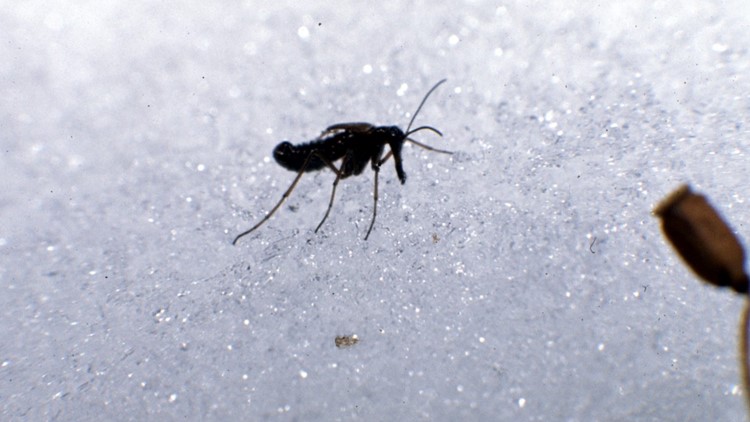
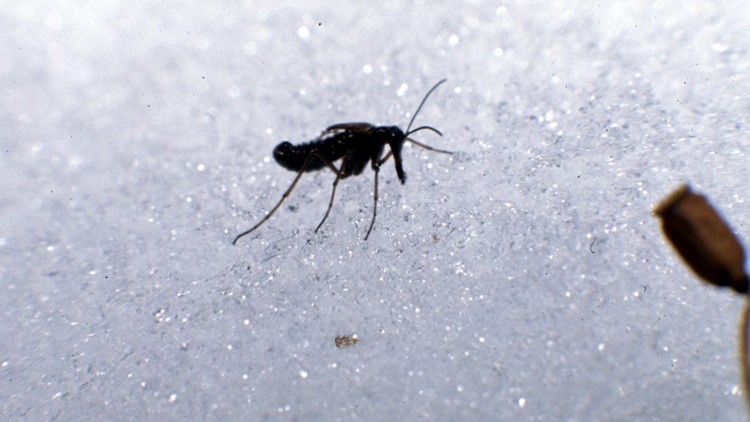
WASHINGTON — After the major winter storm, some people stepping outside may have noticed what looks like a dusting of dirt or black pepper scattered across fresh snow. But those tiny specks aren’t dirt at all. They’re actually small insects that are commonly called snow fleas.
The scientific name for snow fleas, which are also called springtails, is Hypogastrura nivicola. They tend to appear in large numbers during winter, especially after a snow event that’s followed by slightly warmer air.
What are snow fleas?
Despite their name, snow fleas aren’t fleas. They’re tiny, wingless insects with dark bodies and antennae. They get their nickname because they jump, using a spring-like appendage under their bodies, and because they’re most noticeable against white snow.
Snow fleas live outdoors year-round, usually in moist environments like wooded areas with rotting leaves, logs and soil.
According to Michigan State University Extension, they play a key role in breaking down organic matter and recycling nutrients back into the soil. They also help control fungi that can damage plants and serve as food for other small creatures.
Snow fleas are uniquely adapted to survive in cold climates. They produce a natural antifreeze protein that allows them to stay active in freezing and even subzero temperatures.
Despite being active year-round, they often are most visible in winter because they crawl to the surface of the snow, where their dark bodies stand out sharply against the white background. They also often gather in large groups, making them especially noticeable after storms.
Do snow fleas bite?
Snow fleas do not bite, and they’re harmless to humans and pets. While they can be startling to see in large numbers, they don’t sting or transmit disease.
Can snow fleas get inside your home?
It’s rare, but it’s possible. During dry conditions or temperature swings, snow fleas may migrate indoors to try and find moisture. When they do, they’re usually found in damp areas, such as basements, bathrooms, kitchens, near leaky pipes or drains or around house plants.
They don’t damage homes or furniture, but they can become a nuisance if they gather in large numbers.
How do you get rid of snow fleas?
Snow fleas rely on moisture to survive, so it’s important to manage damp conditions to discourage swarms.
Experts recommend trying the following methods to help reduce their presence:
- Fixing leaky pipes
- Using a dehumidifier in basements or bathrooms
- Removing standing water near foundations
- Drying out overwatered houseplants