Salting roads, sidewalks, and driveways only melts ice and snow in certain conditions. It could even make conditions more hazardous if used incorrectly.
WASHINGTON, D.C., USA — An estimated 132 million people were put under alerts for either snow, sleet, or freezing rain ahead of a major winter storm forecast to hit states throughout the central and eastern United States this weekend, the National Weather Service said on Thursday.
The approaching Arctic airmass is expected to bring freezing rain from Texas to the Carolinas and heavy snow from Kansas to New York, setting the stage for the potential of widespread power outages, hazardous travel conditions, and tree damage, according to meteorologists.
Around 106 million people are under alerts for extremely cold temperatures, which are likely to expand to areas south and east over time, the National Weather Service said.
Ahead of the storm, property owners will likely reach for the most popular and least expensive de-icing product on the market: rock salt.
But the extremely cold temperatures that the storm is bringing will likely lessen salt’s effectiveness and may even worsen the impact of ice.
Rock salt is generally most effective at melting ice and snow at temperatures down to around 15 degrees, but the effectiveness and speed of melting diminish as temperatures get colder than that, according to salt producer and multinational food corporation Cargill.

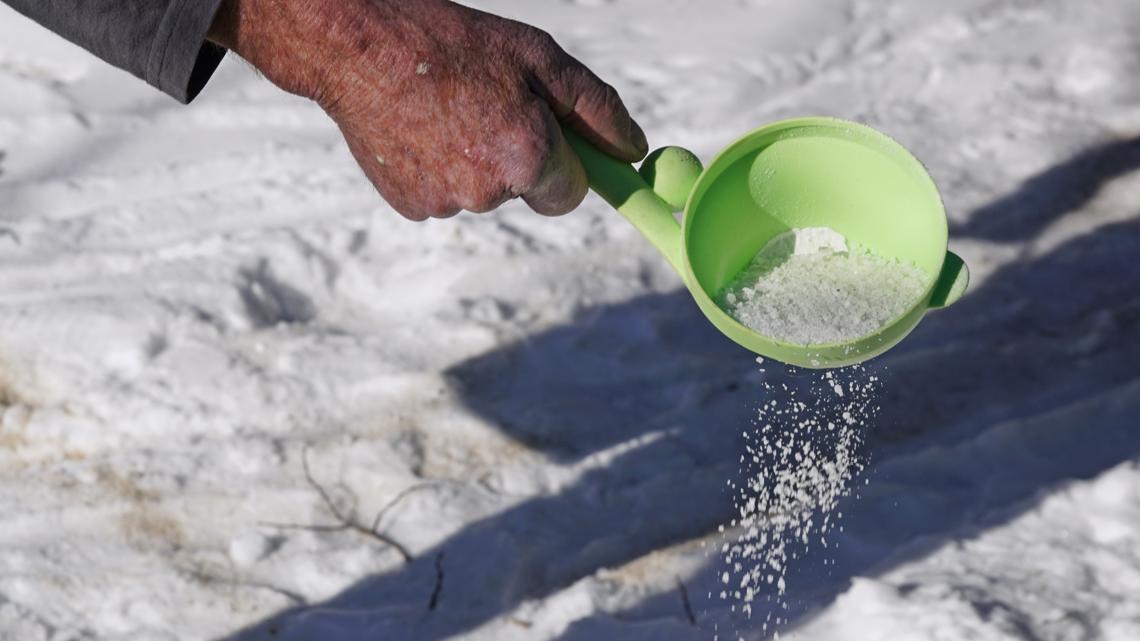
That becomes a problem for the upcoming arctic air, which will cause windchills below zero throughout large parts of the nation.
“Salt’s ice-melting action slows as the temperature drops,” the company said on its website. “This would be less of an issue for applications where time is not critical … but in applications where removal of the snow is desired as soon as possible, such as highway deicing, the ice melting speed of rock salt becomes impractically slow at colder temperatures.”
Using incorrect amounts of salt in extremely cold conditions also runs the risk of making walkways and roadways more dangerous, according to the Salt Institute’s Snowfighter’s Handbook.
Using too little salt can cause refreezing of melted liquid, creating more ice. Using too much salt could cause salt crystallization.
Ultimately, the best time to use rock salt is before temperatures become too cold and after snow has been cleared from either a walkway or roadway, according to Canadian salt producer Draglam Salt. It may be tempting to use large amounts of salt, but it’s more effective to apply just enough to break up ice and then remove it by other means.