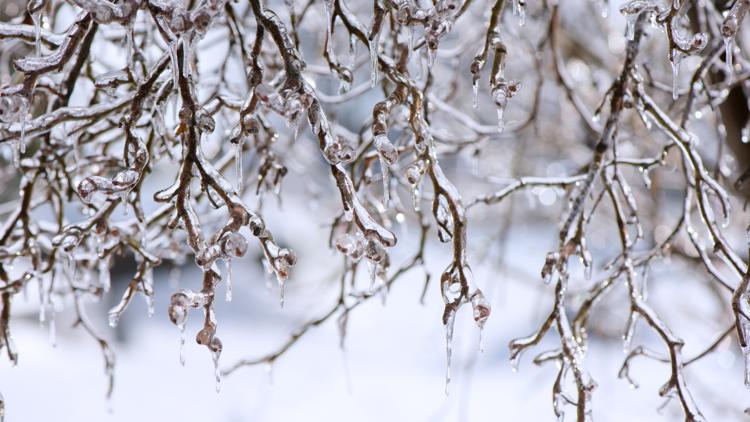
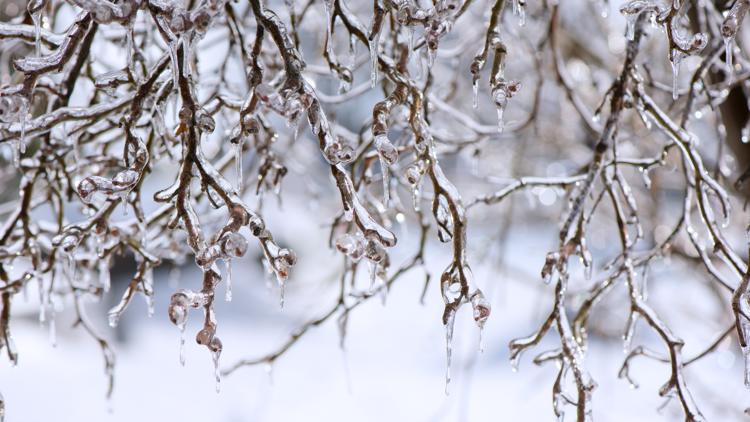
Sleet and freezing rain may seem similar at first glance, but they are definitely different when it comes to impacts.
CLEVELAND — A severe ice storm is the kind of weather event that people seldom forget. It can bring an entire city to a complete standstill. Power lines snap under the weight of thick ice, tree branches crash onto cars, and entire neighborhoods sit in silence…sometimes for days. The only sound you hear is the crack and crash of ice-coated limbs giving way. The roads turn into skating rinks. Drivers are trapped. Emergency responders have to navigate through dangerous icy road conditions. This storm was not caused by snow or sleet alone, but by something far more dangerous: freezing rain.
These icy events happen almost every winter somewhere in the U.S., yet many people don’t know the real difference between freezing rain and its slippery cousin, sleet. One makes for slippery roads, while the other can bring cities to a standstill.
Sleet begins its journey high up in the clouds as snowflakes.
As these flakes fall through a layer of warmer air, temperatures above freezing; they melt into raindrops. But before they reach the ground, they encounter another layer of very cold air that’s below freezing.
The last cold layer transforms the water droplets into small ice pellets before they reach the surface.
When you hear the sound of sleet, it’s often a faint ping, ping, ping against your window or car.
The pellets will bounce when they hit the ground, which serves as a distinguishing characteristic to identify sleet from freezing rain. It makes the roads slick, but usually not as dangerous as an ice storm.
The experience of driving through sleet demands the same level of caution as driving on ball bearings. The roads could be slippery and dangerous.
Freezing rain starts out the same way as sleet, as snow high in the clouds. But the difference lies in what happens on the way down to the ground. This time, the warm layer of air is thicker, so the snow completely melts into raindrops before reaching the ground. Just above the surface, though, there’s a very thin layer of subfreezing air hugging the ground. It may only be a few hundred feet thick… or less! The rain doesn’t have enough time to refreeze before landing, so it stays as liquid until it hits something cold.
The moment those raindrops touch a cold surface, such as a tree branch, road, car, or power line, they instantly freeze into a smooth, clear coating of ice. When this occurs, ordinary rain transforms into a catastrophic weather event.
Roads, bridges and sidewalks become ice skating rinks.
Power lines suffer damage from the weight of the heavy ice.
Sleet and freezing rain may seem similar at first glance, but they are definitely different when it comes to impacts.
Sleet creates slippery roads and walkways and can disrupt travel. It does not harm trees or power lines.
Freezing rain can cause severe disruptions and bring communities to a complete standstill. The weight of the ice accumulation on power lines and trees becomes excessive even in small amounts. The added weight to those power lines often leads to prolonged blackouts which can last for several days.
Freezing rain is by far the most dangerous weather event that all drivers face during the Winter months. There’s no grip for tires. Even four-wheel drive can’t help when your tires are sliding on a sheet of ice. For pedestrians, it’s nearly impossible to walk safely. It’s a real struggle for utility crews to restore power, especially when temperatures stay below freezing.
Think of it this way: sleet bounces, freezing rain coats. Sleet hits the ground as small ice pellets which roll or bounce across the ground. Freezing rain hits the ground as liquid — and then freezes on contact, forming a glaze of ice. When sleet is falling, you can usually see and hear it. When freezing rain falls, it looks harmless, just regular rain, until everything starts turning to glass.
Learning to identify sleet from freezing rain helps people prepare and avoid problems.
Meteorologists provide different alerts for each. For sleet, it will normally be a winter weather advisory and for freezing rain, expect a winter storm warning or a full-fledged ice storm warning.
Mark Johnson is a meteorologist from WKYC in Cleveland. Check your local forecast from your trusted weather team here.