As temperatures rise, monarch butterflies begin their remarkable trek north, renewing one of North America’s most iconic migrations.
SAN ANTONIO — Each spring, one of North America’s most remarkable wildlife events unfolds as the monarch butterfly begins its migration across the United States.
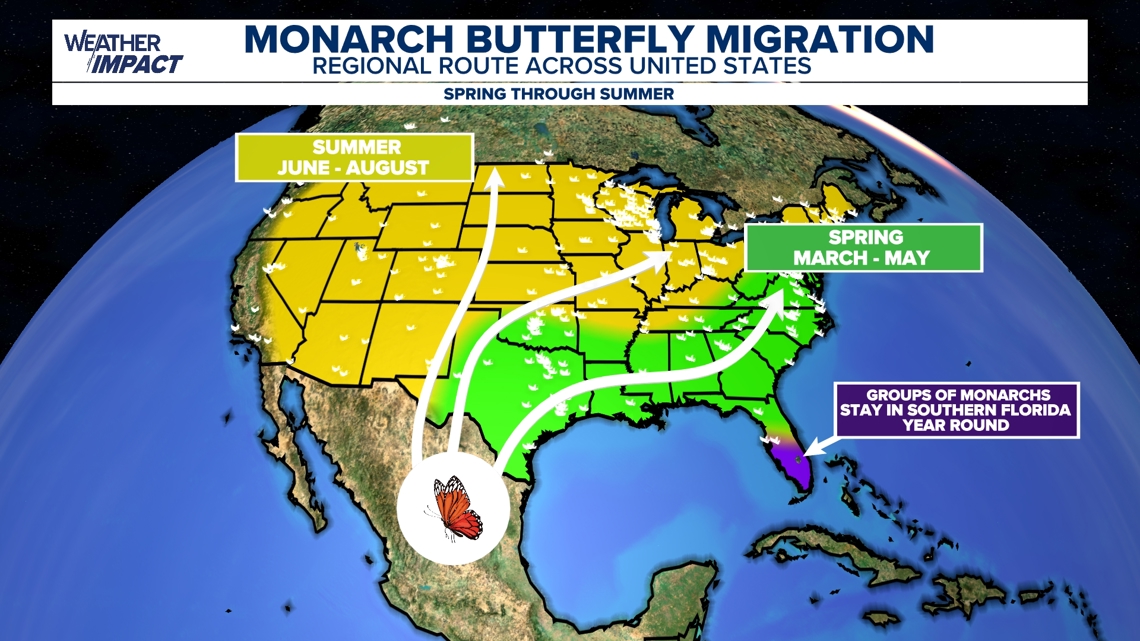
During March, April, and May, millions of monarchs move northward from their overwintering grounds in Mexico, spreading across Texas, the Southeast and eventually into the Midwest and Northeast.
Unlike the single generation that made the long journey south the previous fall, the spring migration is a multigenerational relay. Butterflies that overwintered in Mexico depart in March, lay eggs on emerging milkweed plants in the southern U.S., and then die, leaving the next generation to continue the journey northward.

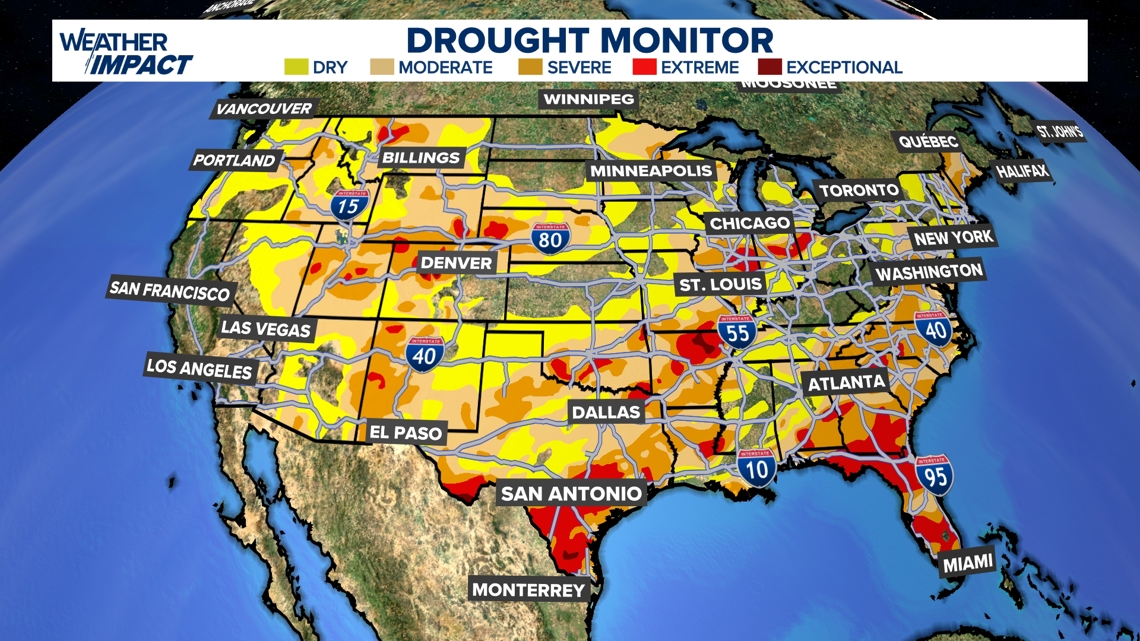
Some have noticed a decline in the number of butterflies migrating in recent years. One explanation could be a worsening drought across the Southern United States. Drought reduces the growth and health of milkweed, the only plant monarchs lay their eggs on and the sole food source for their caterpillars. When milkweed is scarce, stressed, or stunted due to dry conditions, fewer larvae survive, which lowers the number of butterflies that continue the migration northward. Drought also limits nectar-producing flowers that adult monarchs rely on for energy during their long journey.

By April and May, successive generations push deeper into the central and northern United States, following the availability of milkweed. While no single butterfly completes the entire journey from Mexico to the northern U.S. and Canada, the multigenerational migration can span up to 3,000 miles, with generations continuing the trek over several months.
This endurance-driven relay makes the monarch’s migration one of the longest and most incredible insect migrations in the world.

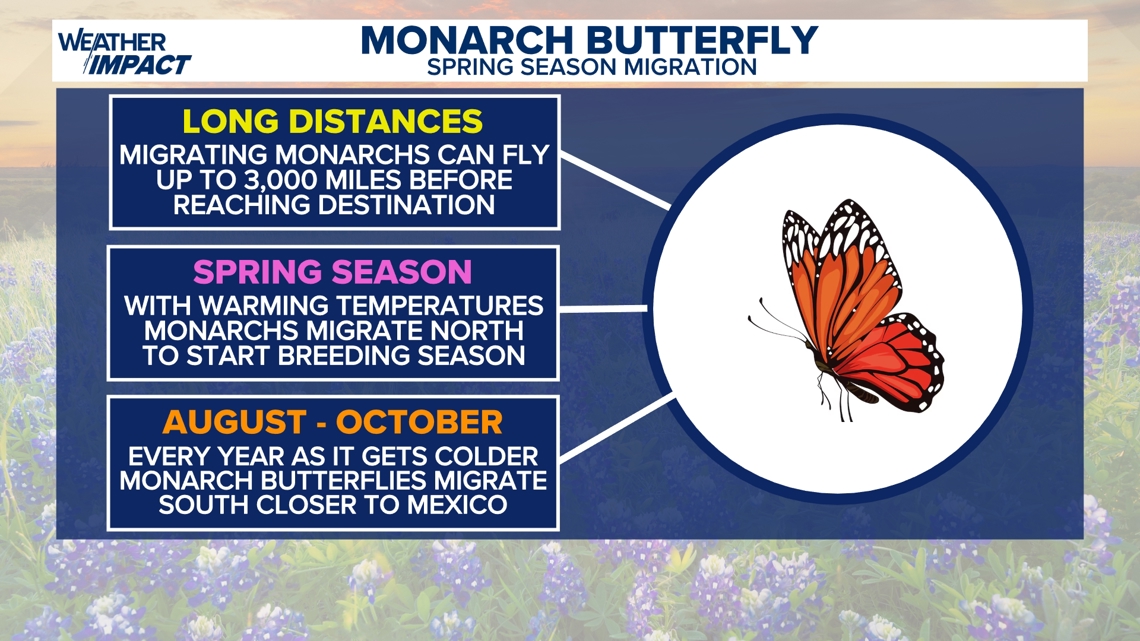
Weather patterns play a critical role during this period; warm temperatures and favorable winds can accelerate their expansion, while late frosts or heavy storms can slow progress and reduce survival rates.
This annual spring movement replenishes monarch populations across the country and supports pollination. But urban development and declining milkweed availability continue to threaten the migration, highlighting the importance of habitat conservation.