Ahora rentando apartamentos de 2 habitaciones • Excelente ubicación • Vida asequible
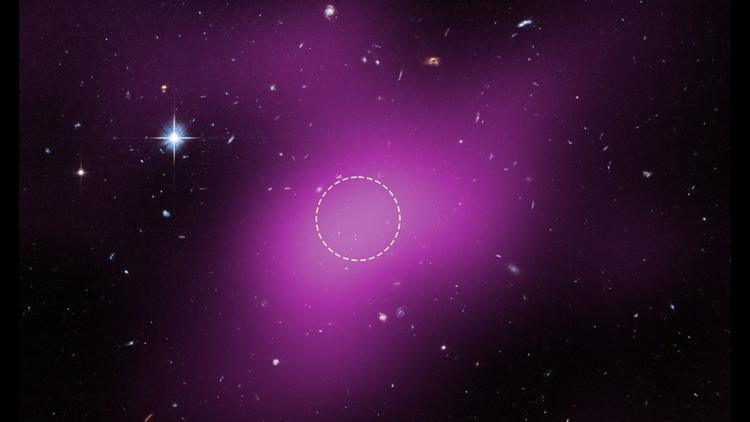
The discovery gave scientists a rare chance to study dark matter without interference from stars.
WASHINGTON — For the first time ever, astronomers have confirmed the existence of a “failed galaxy,” a massive, starless cloud of gas and dark matter that never became a galaxy at all, according to NASA.
Scientists said the object, nicknamed Cloud-9, is a leftover building block from the universe’s early days, offering a rare look at how galaxies form and what happens when they don’t.
The findings were published this week in The Astrophysical Journal Letters and presented at an American Astronomical Society meeting in Phoenix.
“This is a tale of a failed galaxy,” said Alejandro Benitez-Llambay, the study’s lead researcher. “In science, we usually learn more from the failures than from the successes. In this case, seeing no stars is what proves the theory right. It tells us that we have found in the local universe a primordial building block of a galaxy that hasn’t formed.”
In simple terms, most galaxies form when gas collapses and ignites into stars. Cloud-9 never made it that far. It has plenty of gas and a huge amount of dark matter, but for reasons scientists are still studying, it never lit up.
Dark matter is thought to make up most of the universe, but it can’t be seen directly. Cloud-9 gives scientists a rare chance to study a dark-matter-dominated object without the glare of stars getting in the way.
“This cloud is a window into the dark universe,” said researcher Andrew Fox. “We know from theory that most of the mass in the universe is expected to be dark matter, but it’s difficult to detect this dark material because it doesn’t emit light. Cloud-9 gives us a rare look at a dark-matter-dominated cloud.”
Cloud-9 is about 4,900 light-years wide and sits near a spiral galaxy called Messier 94, with which it appears to have a physical association. Its much smaller, more compact and spherical than previously observed hydrogen clouds.
While it was first detected by radio telescopes a few years ago, only the Hubble telescope was powerful enough to confirm that Cloud-9 contains no stars at all.
NASA said its possible that Cloud-9 could form a galaxy in the future if it grows larger, though it’s unclear how that would occur. For now, it exists in a middle space between collapsing and forming stars, and dispersing and ionizing into nothing.
Researchers believe there might be many more of these “abandoned” galaxy seeds from the universe’s early days.
💌 Mantente al Día con lo Último del Entretenimiento Latino
Recibe noticias exclusivas de celebridades latinas, chismes virales, belleza, moda y entretenimiento — directo en tu correo.
Sin spam. Solo lo mejor de Atlanta Latinos Magazine.