
Ahora rentando apartamentos de 2 habitaciones • Excelente ubicación • Vida asequible
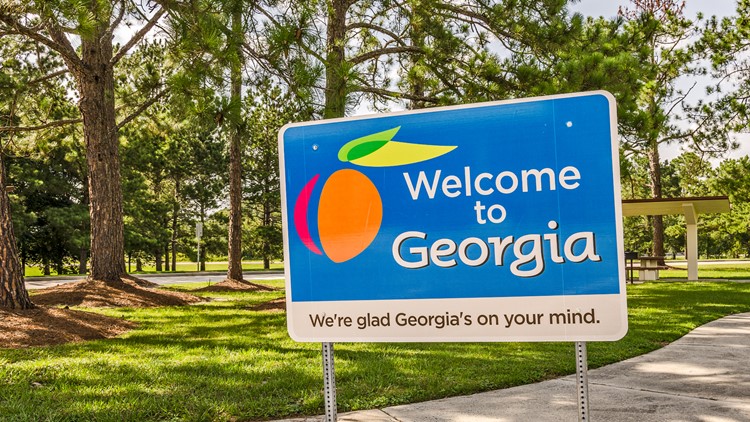
One of the researchers who’s been on the forefront of tracking the trend of the Southern accent’s fade spoke to 11Alive’s Dan Kennedy this week.
ATLANTA — It’s a subject that comes up from time to time and can cause both deep discussion and great consternation around the South: The region’s iconic accent is fixin’ to disappear.
Most recently, an essay in The Atlantic published just after the New Year lamented the “last days of the Southern drawl.”
It’s not gone, of course — the twangy fluctuation in words like “time” or “air,” or “twang” for that matter, still rings out in communities across the South, and it’s still quite common in older generations who grew up with it. But as The Atlantic article notes, and what research has found, is that it’s been harder and harder to observe in younger people and in major urban centers like Atlanta.
One of the researchers who’s been on the forefront of tracking this trend, University of Georgia linguistics professor Dr. Jon Forrest, spoke to 11Alive’s Dan Kennedy on Monday about the Southern accent’s fade and what it means.
Dr. Forrest said there’s a nuance to understanding it.
“What I’d say is basically that pieces of the Southern drawl are going away, a lot of the things that people think of when they think of Southern accents are gone,” he said. “But I wouldn’t say necessarily that like, we’re not sounding Southern, it’s just Southern means something different nowadays than it used to.”
He added that some things about the accent that people notice less “might be still kept around, but people don’t pay as much attention to them — but these iconic things, like vowel pronunciations… those are going away.”
The cause of the Southern accent’s decline isn’t really a mystery — over the last several decades, more and more people from other parts of the country have moved to the South, and in turn generations farther down the line have less developmental reinforcement for adopting the accent.
Dr. Forrest and a colleague, Dr. Margaret Renwick, published research a couple years ago showing that the most clear fall-off for the Southern accent happened between Baby Boomers and Generation X. He noted that about since roughly the 70s “a lot more people in the United States have moved to the South — all the Sunbelt cities are really big, they’re growing more and more every year, and that migration in brings a lot of people who sound different than people in the South used to.”
“When you have a bunch of people together like that, accents often change. It’s what we call dialect contact,” Dr. Forrest said.
He said when he gives presentations, he tries to focus not on the loss of the Southern accent but on contextualizing what these changes can mean.
“It can be losing something, right? Like I think accent is tied to identity but it is always changing, I sort of open with saying we’re re-forging what the South means, because the changing of the accent is not necessarily a loss but a reinterpretation of what the South is and what it could be,” Dr. Forrest said.
Noting that it isn’t all about a sense of the Southern accent slipping away, he gave the example of the word “y’all.”
“I know a lot of people have picked up ‘y’all,’ that’s kind of grown actually,” he said. “So that’s definitely a piece of the South that feels like it can be maintained, it’s got a new second life where it’s even stronger outside the South.”
As for preserving the accent or slowing its disappearance, Dr. Forrest said that comes down to individual people, families and communities and how they choose to fashion their identity.
“My take on this is always that, preserve what you wanna preserve about how you do things,” he said. “I’ll often sit down and talk to people about — what does it mean to you to be Southern? For some people the accent is really important for that, for some people it’s not. For some people it’s like well the accent isn’t it, but I care that I’m polite, I care that I love sweet tea, I love biscuits. Culture is really broad — accents are a part of it, but keep around what you wanna keep around.”
He added that for linguists, an important part of their work is already ensuring that the way the Southern accent sounds isn’t lost to history.
“But we don’t wanna say — hey well this is something we shouldn’t think about or keep around or record, or anything like that,” he said. “A lot of what linguists wanna do is keep peoples’ voices, we have lots of peoples’ recordings who do have these Southern accents, and it’s good to know where we came from so that we know where we’re moving.”
💌 Mantente al Día con lo Último del Entretenimiento Latino
Recibe noticias exclusivas de celebridades latinas, chismes virales, belleza, moda y entretenimiento — directo en tu correo.
Sin spam. Solo lo mejor de Atlanta Latinos Magazine.