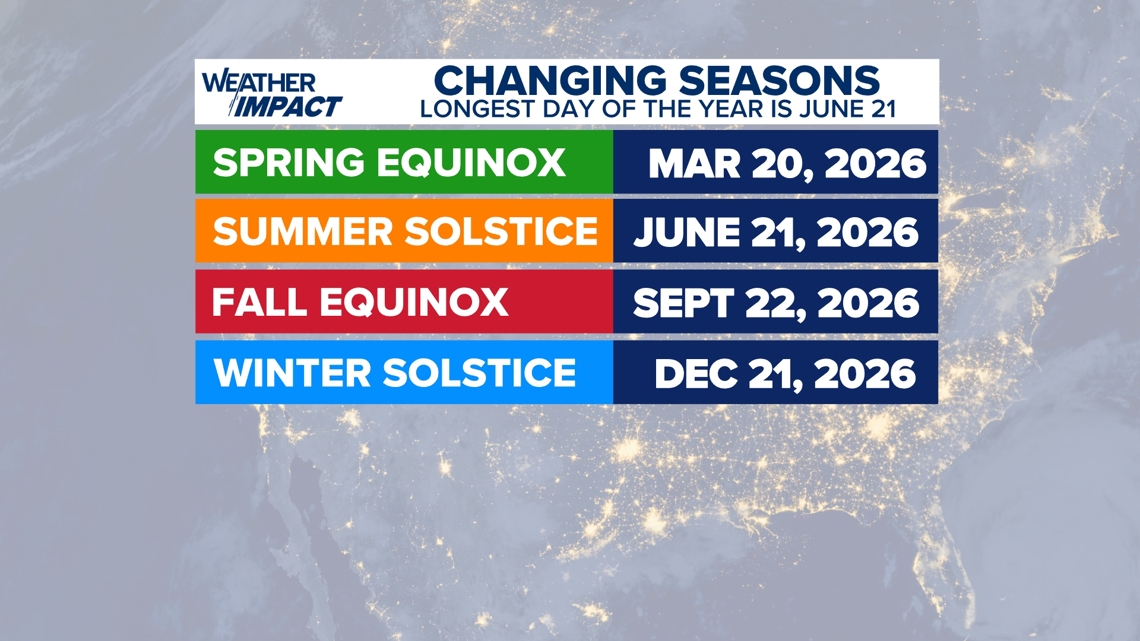
Despite winter’s cold grip, daylight steadily increases throughout February as Earth’s tilt shifts the sun higher in the sky.
After the winter solstice in late December—the shortest day of the year—the Northern Hemisphere begins a slow but steady march toward longer daylight. By February, the change becomes much more noticeable as the sun rises earlier and sets later each day.

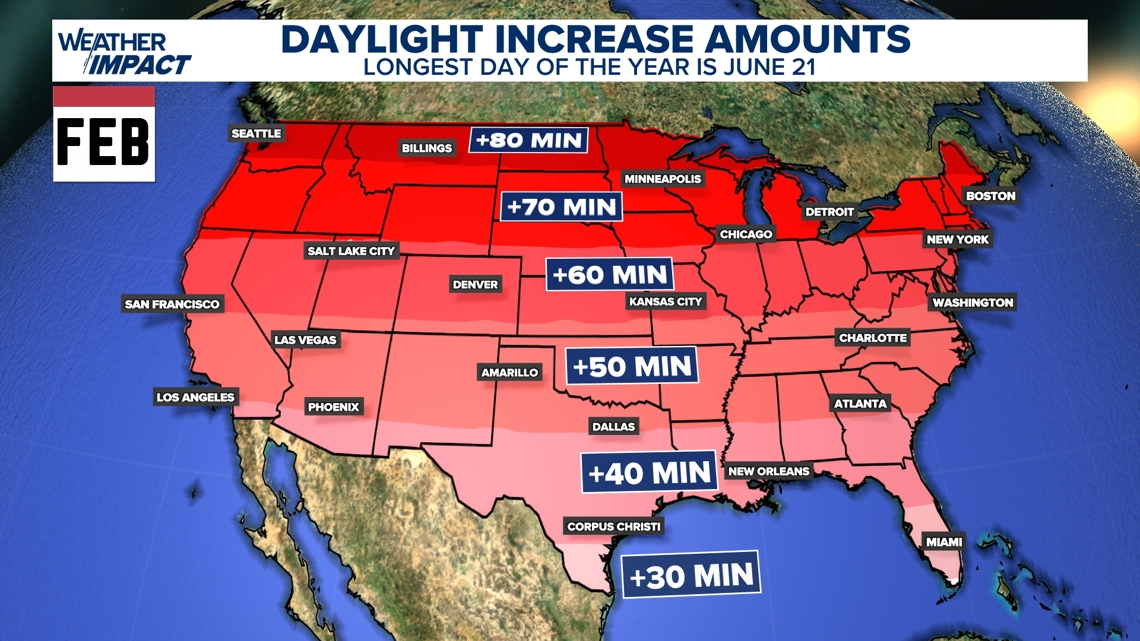
This happens because Earth’s tilt causes the sun’s angle across the sky to climb higher as we move toward spring, increasing the amount of time it spends above the horizon — in February and March especially as the pace of daylight gain drastically! The amount of sunlight accelerates, even though winter’s cold grip often lingers.
While temperatures may remain colder than average due to lingering snow, long nights, and slow-to-warm land and water, the sun is delivering more daily energy. By the time the spring equinox arrives in March, day and night are nearly equal in length. This exact amount of day and night varies based on latitude. However, this marks a clear astronomical transition toward warmer seasons—even if the weather hasn’t fully caught up yet.

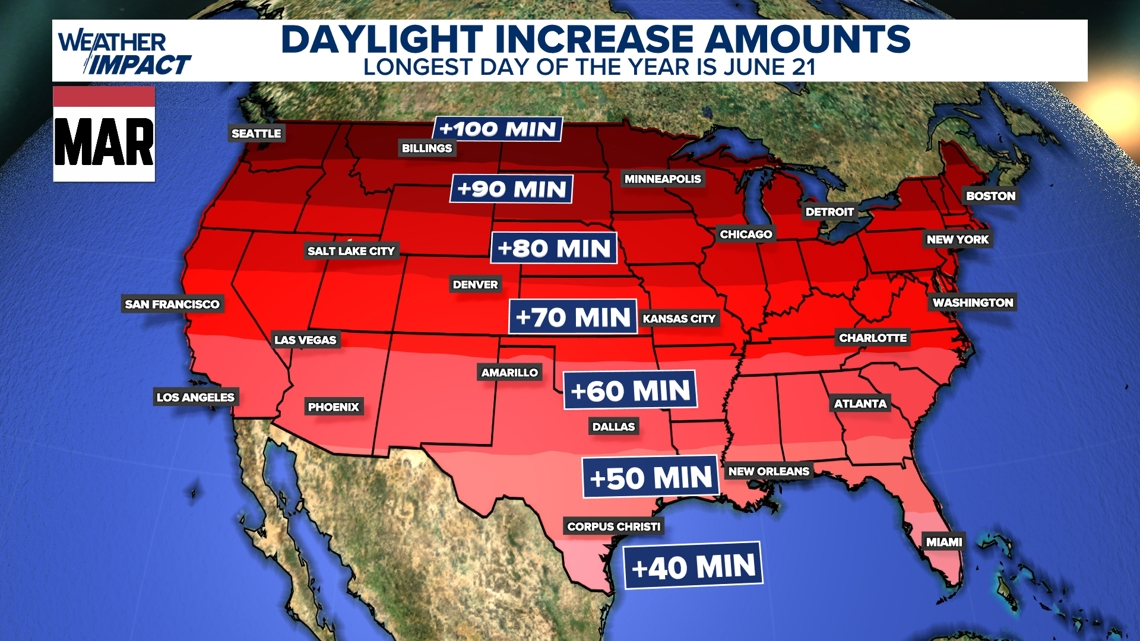
This increase in daylight is most dramatic across the central and northern United States. In these regions, the sun’s path changes more rapidly during late winter, allowing many locations to gain an additional 80 to 100 minutes of daylight between February and March. That extra sunlight can have a noticeable impact, improving mood, extending evening light, and signaling the approaching end of winter. Even amid cold temperatures, the lengthening days are a reliable reminder that spring is on the way.