While arctic outbreaks linger through March, January is climatologically the coldest month of the year for most. Why is January the coldest?
January is statistically the coldest time for most states of year in many regions due to a phenomenon known as seasonal lag.
This is when temperatures occur weeks after the solstice. In this case the Winter Solstice which was back on December 21.

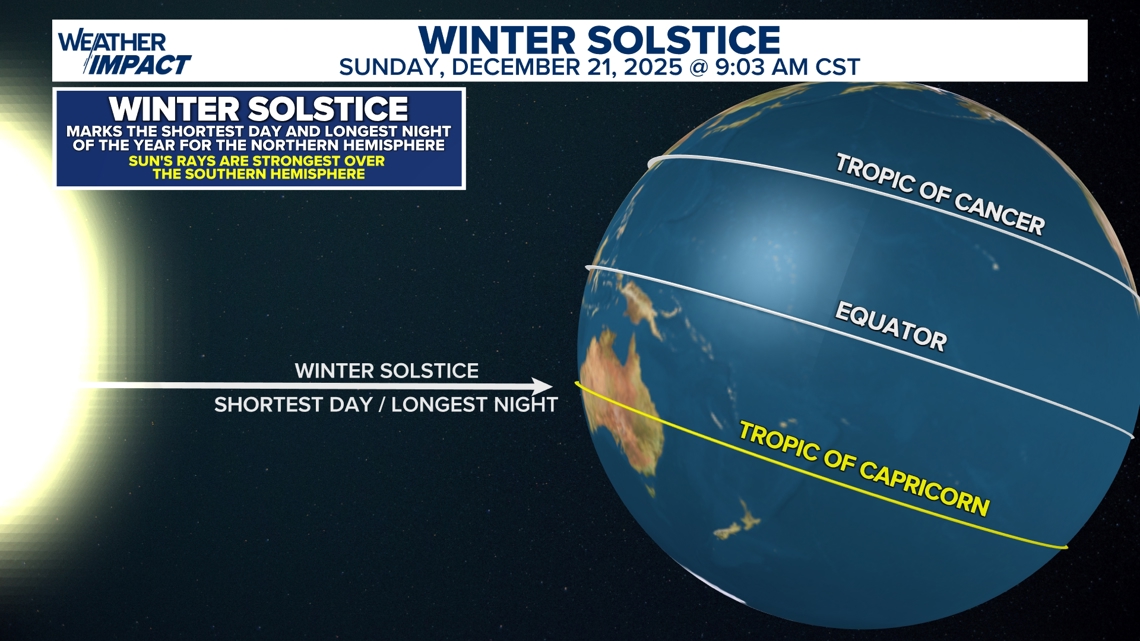
Although the Winter Solstice marks the shortest day, longest night, and lowest sun angle, the Earth’s surface and oceans retain heat during warmer months and release it gradually. Land surfaces and oceans take time to cool and warm.
During late fall, incoming solar radiation still slightly exceeds outgoing heat, but in the month of December, this changes. Heat loss increases, causing temperatures to fall even after daylight begins increasing. As a result, high and low temperature averages typically bottom out from December into January rather than on the solstice itself.
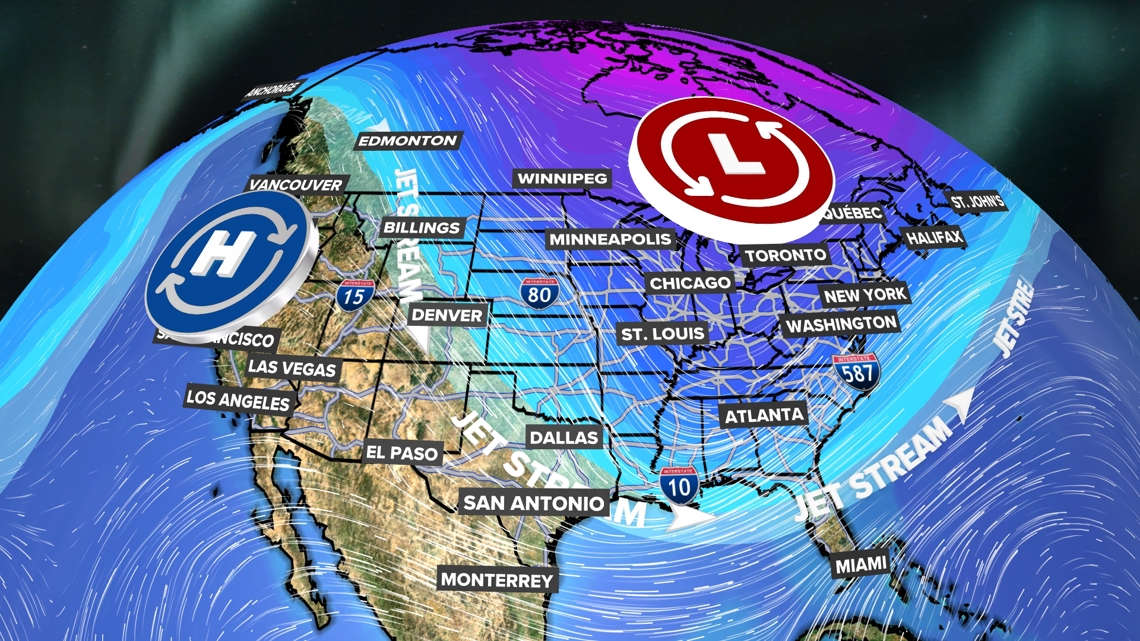
Geographical and meteorological factors reinforce this coldest period. During early winter, large-scale atmospheric circulation patterns favor the transport of cold air from polar regions into the lower latitudes. The polar jet stream often intensifies and becomes more variable, allowing Arctic air masses to plunge southward more frequently.

Snow cover, which is more widespread and most extensive in January, amplifies the cold through what meteorologists refer to as albedo.
Albedo is the level of reflectance of a surface. Snow reflects light while other surface colors absorb heat. Albedo directly impacts temperature.
If snow reflects all the heat and radiation coming in, the ground can’t warm efficiently. This results in colder air temperatures despite the sun being out.
Long winter nights also allow for greater radiational cooling which leads to lower overnight lows that heavily influence temperature averages.
Geography also plays a crucial role. Continental interiors experience stronger seasonal lag than coastal areas because land heats and cools more rapidly than water, leading to more extreme winter cold.
Higher elevations and mountainous regions enhance cold air pooling and prolonged snowpack, delaying spring warming. As winter progresses toward February and March, the increasing solar angle gradually overcomes heat losses, but lingering snow cover, cold oceans, and persistent jet stream patterns can prolong below-average temperatures into early spring.
Together, these geographical, meteorological, and seasonal factors explain why late December through mid-January consistently emerges as the coldest stretch of the year when viewed through long-term climate averages.

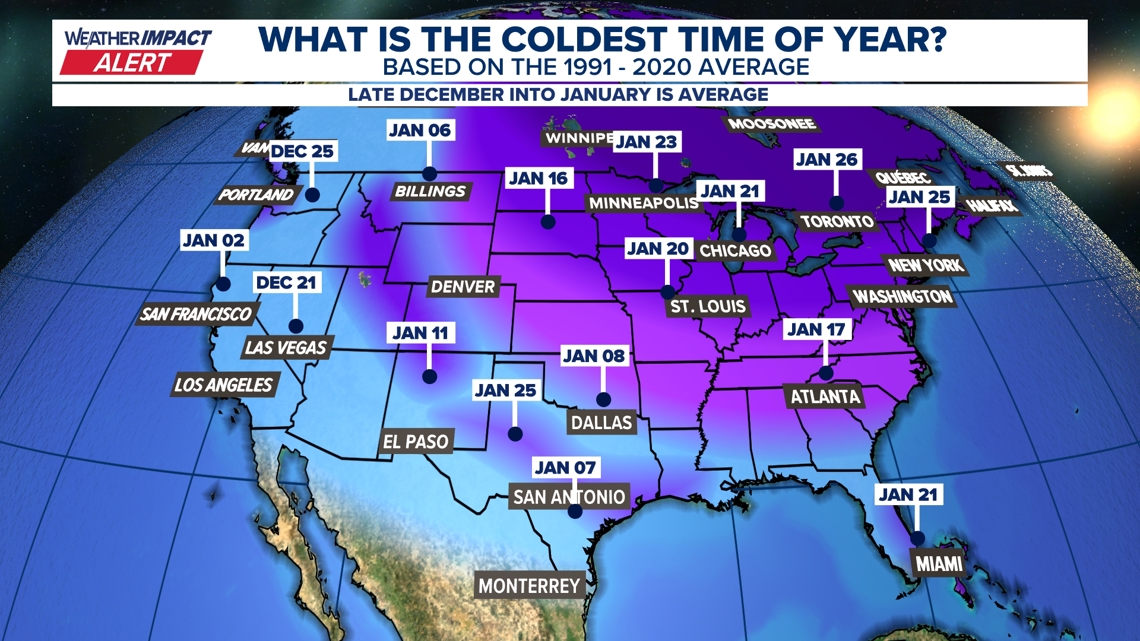
While arctic outbreaks and cold snaps will occur in February, if you look at average temperatures, it’s only up from here!
Ryan Shoptaugh covers national weather. Check your neighborhood forecast from your local trusted local weather team here.